
Hand-Held Horoscopes—What Palm Lines Can (and Can’t) Tell You About the Road Ahead
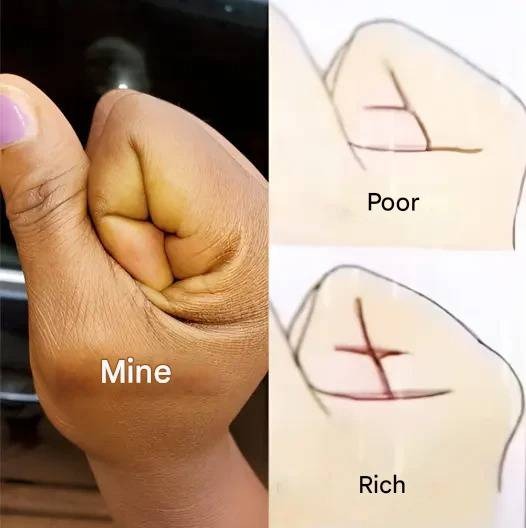

Palmistry is less fortune-cookie magic and more human cartography: creases formed in the womb, deepened by decades of grip, gesture, and emotion. Cultures from Delhi to Delphi treated these folds as miniature trade routes of fate—some leading to gold, others to grief. Here’s a field guide to the major “destiny roads,” the folklore attached to each, and the hard science that keeps palm-readers honest.
Reality: Depth reflects overall vitality; short lines belong to Olympians and centenarians alike. Trauma, surgery, or chronic stress can create “breaks” that heal as new branches—less death omen, more life journal
Long, straight: classic “analytical thinker.” Curved, sloping: creative dreamer. Science says the dominant hand’s crease often follows hand use; writers and sculptors frequently show more slope from repeated ulnar deviation.
Heart Line (top horizontal)
Folklore splits it: chained = romantic turmoil, forked = ability to reconcile logic and emotion. Dermatologists note that eczema, psoriasis, or even excessive hand-washing can create chain-links—less cosmic heartbreak, more epidermal distress.
Fate / Luck Line (vertical, center palm)
Asian traditions call this the “luck pillar”; its absence supposedly signals self-made success. Statistically, roughly 15 % of people are born without a visible fate line—same percentage who become entrepreneurs, same who don’t. Coincidence is the quiet skeptic in the room.
Sun / Apollo Line (parallel to Fate, under ring finger)
Medieval palmists linked it to artistic fame; modern magicians call it the “spotlight crease.” Neurologists find it more common in people who perform repetitive finger extensions—pianists, magicians, and yes, actors flashing jazz-hands at curtain call.
Mercury Line (vertical under pinky)
Traditionally the “business line”; double lines meant “gift of gab.” Today we know the crease deepens in individuals who use smartphones constantly—pinkies braced against glass, Mercury upgraded to Wi-Fi.
Intuition / Via Lascivia (curved horizontal beneath Head and Heart)
Rare, often touted as the “psychic tunnel.” Scientists call it a secondary flexion crease; its appearance correlates with looser connective tissue—double-jointed fingers, not sixth senses.
Bracelets (horizontal lines on wrist)
Indian texts count them: three = long life, four = “blessed by Lakshmi.” Anatomically, they’re skin folds over the flexor retinaculum; weight fluctuation, hydration, or collagen loss makes them fade or multiply—more biology than blessing.
Mounts (fleshy pads beneath fingers)
Each pad maps to a planet in classical palmistry. Modern hand surgeons know the same zones align with digital nerve branches—numbness in the “Mount of Venus” is actually compression of the ulnar digital nerve, not a love drought.
Finger Ratios (2D:4D)
Perhaps the only palm feature with robust data: a lower index-to-ring-finger ratio correlates with higher prenatal testosterone exposure and is linked to athletic prowess, musical ability, even risk-taking. This ratio is set by week 14 in the womb—your hand’s closest thing to a biological crystal ball.
Reading Room Etiquette
Always compare dominant vs. non-dominant hands; changes between them chart adaptive growth, not fixed destiny.
Lines evolve—deep grief can carve new branches, meditation can soften harsh angles. Think “weather report,” not “carved stone.”
Use palmistry as a conversation mirror, not a verdict. Ask: “Does this crease inspire you to strengthen creativity, communication, or resilience?” The power remains in the person, not the palm.
Bottom line: hands are diaries written in flesh. They record how we’ve gripped the world, not necessarily where the world will grip us back. Enjoy the folklore, respect the science, and let every glance at your palm be a reminder that the real author of tomorrow is the fist you unclench today.